Most people in Bangkok extend their stay at least once, whether a 30-day tourist extension or a yearly extension based on work, marriage or retirement. You can do it yourself, and many people do. Others pay a document service to prepare the file. This guide explains the do-it-yourself route, what an agent legitimately adds, and how to tell the two apart from the services you should avoid.
This article covers extensions of stay filed in Bangkok. For the visa types themselves, see our guides to the Non-B business visa, the DTV and the LTR visa.
Where to go#
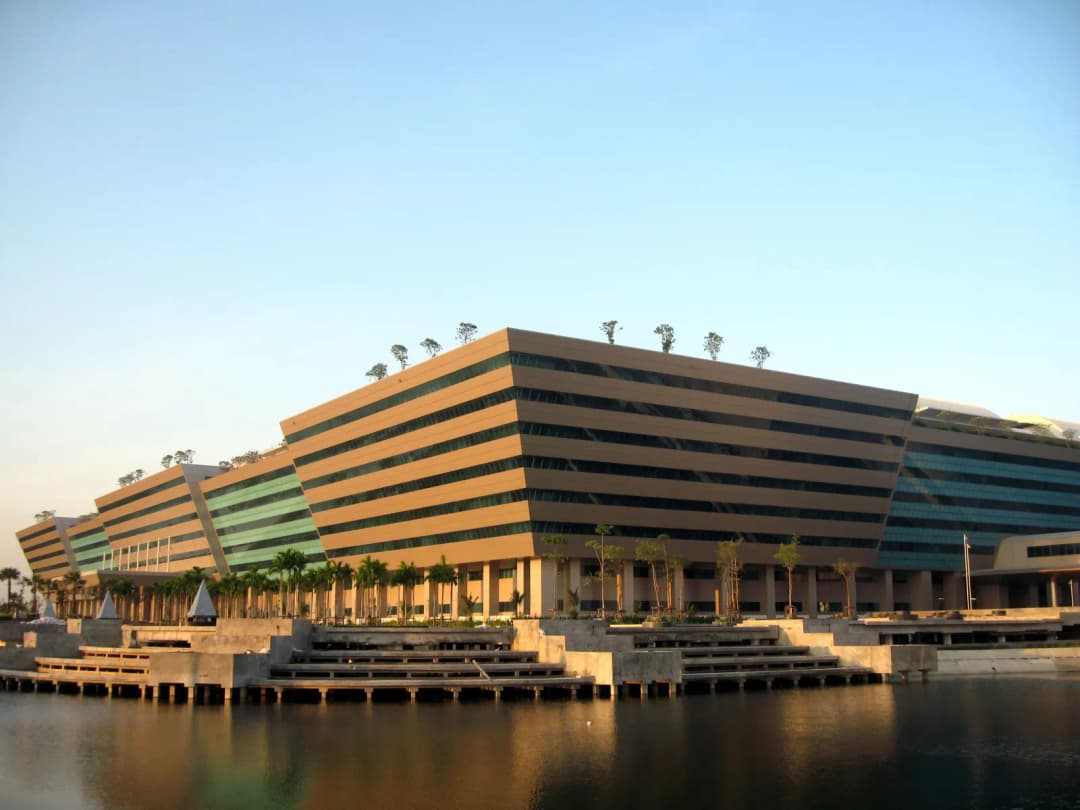
Foreigners living in Bangkok file at the Immigration Division 1 office at the Government Center, Chaeng Wattana Road, Building B, 2nd floor, Lak Si. The office only serves people whose address is in Bangkok. If you live in Nonthaburi, Pathum Thani or Samut Prakan, you file at that province's immigration office instead (Immigration Bureau).
Practical points:
- Arrive early. The office handles a large number of applicants, and the queue system can take most of a day on busy days.
- Dress neatly. Government offices expect covered shoulders and long trousers or skirts.
- Bring cash and copies. There are photocopy and photo shops in the building, but queues for them add time.
- Check your TM30. Your landlord or hotel must have notified Immigration of your address. Officers often check it before accepting an extension (see below).
The do-it-yourself route#
Step 1: Check what you qualify for#
The documents depend on the reason for the extension. A tourist extension is the simplest. Extensions based on employment, marriage to a Thai national, retirement or study each have their own financial and documentary requirements, set by Immigration orders that change from time to time. Read the Immigration Bureau page for your category before you prepare anything.
Step 2: Prepare the basic file#
For every extension you need at least:
- form TM.7, completed and signed;
- your passport, plus copies of the photo page, the visa, the latest entry stamp and the departure card if you have one;
- one recent 4×6 cm photo;
- the 1,900 THB fee;
- evidence that your address has been notified (TM30 receipt) where requested.
Sign every copy. Thai offices expect each photocopy to be signed by the person it belongs to.
Step 3: Add the category documents#
| Extension based on | Typical extra documents (check the current order) |
|---|---|
| Tourism | Usually none beyond the basic file. Up to 30 days for most nationalities, 7 days for some |
| Employment (Non-B) | Work permit, company documents, tax and social security filings, salary evidence (work permit guide) |
| Marriage to a Thai national | Marriage registration, Thai spouse's ID and house registration, financial evidence, photos at home |
| Retirement | Age evidence, bank letter and passbook, or income letter, plus health insurance where required |
| Study | Letter from the school or university, enrolment and attendance evidence |
Step 4: File and wait#
Officers check the file and take your fee. For one-year extensions, you often get an "under consideration" stamp first and come back for the final stamp about a month later. Our work permit guide explains this for employment cases. Do not travel without a re-entry permit, or the extension will be lost when you leave.
Common reasons a file is sent back#
Most delays come from small, avoidable problems. Check these before you queue:
- Unsigned copies. Every copy of your passport pages should be signed.
- The wrong photo. Use a recent 4×6 cm photo, not a selfie printout.
- An old TM30. If you moved, your new landlord must file a new notification.
- Documents in the wrong name. Company documents, bank letters and marriage papers should match your passport name exactly.
- Expired supporting documents. Bank letters and medical certificates are often accepted only if recently issued. Check the date limit in the current order.
- Filing too late. File before your permission to stay ends. An application filed after the expiry date is an overstay, and a daily fine applies.
A realistic timeline for a one-year extension#
- Six to eight weeks before expiry: read the current Immigration order for your category and list the documents.
- Four weeks before: collect company, bank or marriage documents and translations.
- Two weeks before: check the TM30 and make the copies and photos.
- Filing day: queue, file, pay 1,900 THB and get the "under consideration" stamp if your category uses one.
- About a month later: return for the final stamp. Apply for a re-entry permit if you plan to travel.
Put the next 90-day report and the next renewal in your calendar the same day.
What a legitimate agent does#
A good document service saves you time, mainly by getting the file right the first time. Legitimate work includes:
- reading your situation and telling you which category and documents apply;
- preparing and translating supporting documents;
- checking signatures, copies and photos before you go;
- in some cases, booking or managing the queue, and going with you to the office;
- reminding you about your 90-day reports and the next renewal.
What an agent cannot lawfully do:
- get you an extension in a category you do not qualify for;
- replace the requirement that you appear in person where the office requires it;
- create bank deposits, employment or marriage that does not exist.
Warning signs#
Be very careful with any service that:
- promises an extension "with no requirements" or "no need for money in the bank";
- asks you to leave your passport with them for days, so they can "handle it";
- offers a stamp without you going to Immigration;
- will not tell you the government fee separately from its own fee.
A stamp obtained by fraud is not a valid permission to stay. If it is found, the passport holder can be treated as an overstayer, with the fines, detention, deportation and re-entry bans that the Immigration Act allows. The person who carries that risk is the passport holder, not the agent.
DIY or agent: how to decide#
| Situation | DIY works well | An agent may help |
|---|---|---|
| 30-day tourist extension | Yes. The file is simple | Rarely needed |
| First one-year extension (work, marriage, retirement) | Possible if you read the order carefully | Useful if you are short of time or unsure of the documents |
| Renewal with the same documents as last year | Yes | Rarely needed |
| Company sponsoring several foreign employees | Possible in-house | Often cheaper than staff time |
| You do not read Thai and your documents are Thai | Possible with a translator | Helpful |
Whichever you choose, keep copies of everything filed and the receipt.
TM30 and the 90-day report#
TM30. The owner, landlord or hotel where a foreigner stays must notify Immigration within 24 hours of the foreigner's arrival at the address. The notice is the landlord's duty, but a missing TM30 often holds up the tenant's extension (Immigration Bureau, notification of residence). If you rent, ask your landlord for the receipt. See our guide to renting a condo in Bangkok.
90-day report. Anyone staying in Thailand for more than 90 days in a row must report their address every 90 days. This can be done online, in person or by post, and is separate from the extension.
Frequently asked questions#
How much does a visa extension cost in Bangkok? The government fee is 1,900 THB. An agent's fee, if you use one, is extra.
Where do I extend my visa in Bangkok? At Immigration Division 1, Government Center, Chaeng Wattana, Building B, 2nd floor, Lak Si, if your address is in Bangkok.
How long is a tourist extension? Usually up to 30 days, and 7 days for some nationalities.
Can someone else file my extension for me? Generally you are expected to attend in person. An agent can prepare the file and go with you.
Do I need a TM30 to extend my visa? Officers often check that your address has been notified. Ask your landlord or hotel for the TM30 receipt before you go.
Can I leave Thailand while my extension is "under consideration"? Only with a re-entry permit. Otherwise the pending extension is cancelled when you leave.