Moving to Bangkok with a dog or cat is very doable, and when an arrival goes wrong it is almost always the paperwork: a vaccine given too late, a microchip number that does not match, or a health certificate without the right government stamp. This guide follows the process in order, using rules from Thailand's Department of Livestock Development (DLD), which runs the airport quarantine stations, and the Bangkok Metropolitan Administration (BMA). Rules change, so recheck the linked official pages shortly before you fly.
Step 1: Check the timeline before you book anything#
Work backwards from your flight date. A realistic plan looks like this:
- At least 21 days before departure: all primary (first-time or lapsed) vaccinations done. Boosters given on time, with an unbroken record, do not need the wait.
- About 30 days before departure: email the import permit application. The Thai consulate guidance recommends this timing, and the permit stays valid for 60 days after issue (Royal Thai Consulate-General, Los Angeles).
- No later than 7 business days before departure: the last safe moment to apply. Processing takes about 5 business days once the station has complete documents (Suvarnabhumi AQS).
- In the final days before the flight: your vet completes the health certificate and your government endorses it. In the US, for example, the endorsed certificate is valid for 10 days from the USDA stamp (Thai MFA instructions for US travellers, revised January 2025).
Puppies and kittens need extra time: a first rabies vaccine counts only from 12 weeks of age, and then the 21-day wait applies.
Step 2: Vaccines and microchip#
Required vaccines#
According to the Suvarnabhumi Animal Quarantine Station (AQS cargo requirements):
| Animal | Required vaccinations |
|---|---|
| Dog | Rabies, canine distemper, canine hepatitis, canine parvovirus, leptospirosis |
| Cat | Rabies, feline panleukopenia |
If your dog has no valid leptospirosis vaccine, or cannot meet the 21-day wait for it, the dog needs a negative leptospirosis test taken within 30 days before departure instead.
The vaccination record must be in English and show the pet's breed, sex, date of birth, colour and microchip number, plus the vet's full name, licence number and signature.
Microchip#
The microchip number has to appear on the permit application, the vaccine records and the health certificate, and the officer at the airport scans your pet to check it matches. Get the chip implanted before the rabies vaccine. The EU, for example, does not accept a rabies vaccine given before the chip, which matters if you ever move on to Europe (European Commission). Use a 15-digit ISO 11784/11785 microchip, which most countries and airlines expect (Siam Legal).
Rabies titer test#
Thailand does not require a rabies antibody (titer) test to bring a dog or cat in; the official Thai instructions list no such test (Thai MFA instructions). You may still want one if you plan to take the pet back to the EU, the UK or another rabies-free country later. See the section on leaving Thailand below.
Step 3: Apply for the import permit (Form R1/1)#
Email your application to the quarantine station at the airport where you will land. For Bangkok that is:
- Suvarnabhumi (BKK): [email protected]
- Don Mueang (DMK): [email protected]
These addresses are published in the consulate guidance linked above, which also lists the stations at Chiang Mai, Phuket, Samui and Krabi.
Attach:
- Form R1/1, filled in with your name, your address in Thailand and in your home country, the pet's breed, sex, date of birth, colour and microchip number, and your flight details (blank R1/1 form).
- The microchip implantation certificate.
- A copy of your flight itinerary.
- A copy of your passport.
- A colour photo of the pet with its face clearly visible.
- The vaccination certificates described above.
The permit comes back by email. Print it. If your flight is moved but still falls within the 60-day validity, the same permit can be used without reapplying (Suvarnabhumi AQS).
Applying on arrival is technically possible with every original document in hand, but the consulate warns that some airlines refuse to board a pet without an advance Thai permit.
Step 4: The official health certificate#
After you have the permit, a vet in your home country fills in the official health certificate, and your country's veterinary authority endorses it with a stamp and signature. Examples are USDA APHIS in the United States and the Animal and Plant Health Agency in the UK. The airport accepts only the original endorsed certificate. A scan or photocopy is not enough.
Follow your home authority's Thailand certificate template; it lists exactly what your vet must certify.
Step 5: Choose how your pet flies#
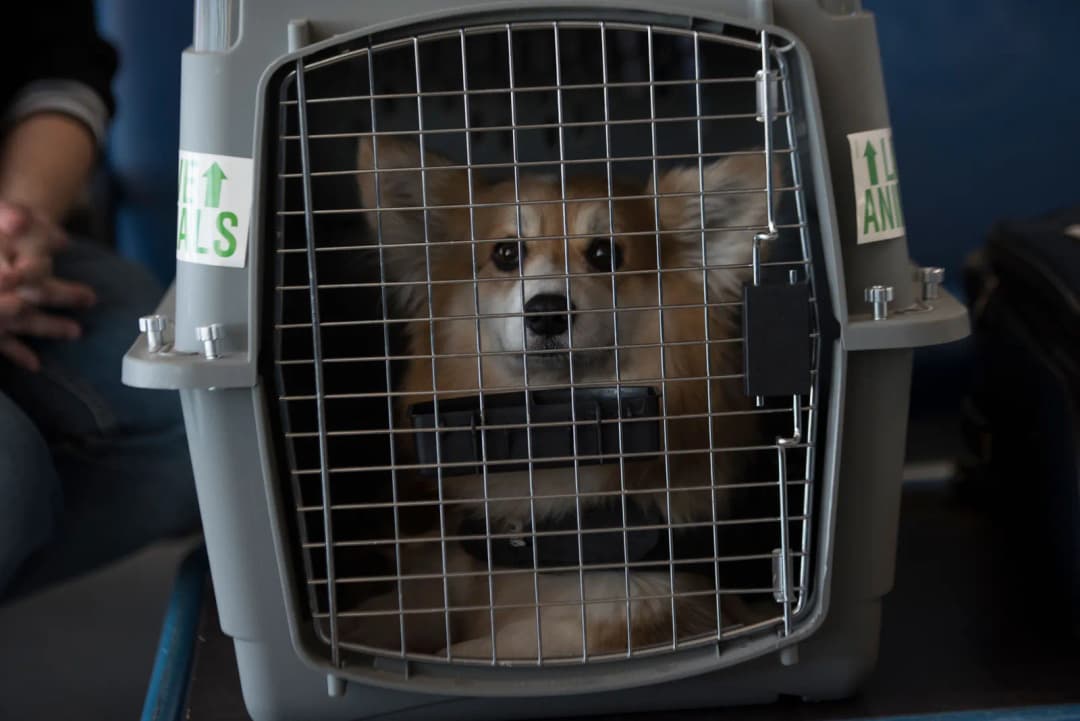
Your pet can fly with you, in the cabin or as checked baggage, and you clear it yourself in the arrival hall. Or it travels as manifested air cargo and is cleared at the cargo terminal, usually by an agent or relocation company.
Airline rules are often stricter than Thai law. Thailand bans no dog breeds from import, but many airlines refuse flat-faced (snub-nosed) breeds. Thai Airways, for example, carries no ordinary pets in the cabin, takes dogs and cats over four months old as checked baggage on international flights, embargoes many snub-nosed and fighting breeds, such as bulldogs, pugs and pit bulls, and needs the request at least 3 working days ahead (Thai Airways pets as checked baggage; Thai Airways cabin policy). Check your own airline's page before you book seats, not after.
Step 6: Arrival at Suvarnabhumi#
If your pet flew with you, collect it with your bags and go to the Animal Quarantine Station next to baggage carousel 8, before customs. It is open 24 hours (tel. +66 2 134 0636). Pets arriving as cargo are cleared at the AQS in the cargo Free Zone, CE-1 Building, open 8:30 to 16:30, Monday to Friday (tel. +66 2 134 0731) (consulate guidance).
Have the originals ready: your passport, the pet's vaccination book or pet passport, the endorsed health certificate and the printed import permit. The officer scans the microchip and checks the documents. If everything is in order, the pet is released the same day. You receive a Notice of Import Approval (Form R-6) and an Import Licence (Form R-7), and you pay 500 baht per animal plus a 10 baht shipment fee (Thai MFA instructions; Suvarnabhumi AQS on-arrival guidance). Bring Thai baht in cash, as the station's own presentation states the fee is paid in cash (AQS presentation). Keep the import licence: it stays valid until the pet leaves Thailand.
If the documents or the animal do not meet the requirements, the station can fine the owner or send the animal back to the country of export at the owner's expense, and the officer can order quarantine (Suvarnabhumi AQS; Siam Legal).
For the drive into the city, our Suvarnabhumi airport transfer guide compares private cars, vans and taxis.
Step 7: Register your pet in Bangkok (compulsory from 10 January 2027)#
This step is easy to miss because it happens after the airport. The BMA Ordinance on the Control of Animal Keeping or Release, B.E. 2567 (2024), was published in the Royal Gazette on 15 January 2025 and was due to take effect on 10 January 2026. An amending ordinance (No. 2) B.E. 2569, published in the Royal Gazette on 8 January 2026, moved the start to 10 January 2027 (Royal Gazette; Thaiger). Until then, registration is voluntary but free at BMA clinics.
What the ordinance requires#
- Microchip and registration within 120 days of birth, or within 30 days of bringing the animal into Bangkok, once the ordinance applies.
- Dogs on a leash in public and wearing ID. Some breeds, such as pit bulls and Rottweilers, must be muzzled (Bangkok Post). Under clause 21 of the ordinance, the handler must be aged 15 to 65.
- Fines of up to 25,000 baht under the Public Health Act B.E. 2535 (Siam Legal).
Where and how to register#
You have two routes (Thai PBS World):
- Free: at a BMA veterinary clinic, or at BMA mobile units that rotate through the city's 50 districts. The microchip is implanted free of charge there. Free microchip drives run on BMA schedules, so check current dates.
- Paid: at a private vet, then register online at the BMA pet registration portal.
Foreign owners register with their passport instead of a Thai ID card. You also need documents for the address where the pet lives, any vaccination or sterilisation certificates, and written landlord consent if you rent. Bring a power of attorney if someone registers on your behalf. If your pet already has an imported ISO chip, ask the clinic whether it can register the existing number rather than implanting a second chip.
The BMA clinics include Clinic 1 at Si Phraya in Bang Rak (tel. 02 236 4055 ext. 213) and Clinic 3 at Wat That Thong in Watthana (tel. 02 392 9278 ext. 118). The Rabies Control Department in Din Daeng (tel. 02 245 3311) answers questions about the ordinance (Khaosod English).
Pet limits per home#
| Type of home | Maximum dogs and cats |
|---|---|
| Rented room or condo of 20 to 80 sqm | 1 |
| Condo over 80 sqm | 2 |
| House on land up to 20 square wah (about 80 sqm) | 2 |
| 20 to 50 square wah | 3 |
| 50 to 100 square wah | 4 |
| Over 100 square wah (over 400 sqm) | 6 |
Source: Thai PBS World. The limits do not apply to pets you already keep before 10 January 2027, but owners over the limit must notify their district office within 90 days of that date.
The ordinance sets a ceiling. It does not override your building's rules: a condo's registered bylaws can still ban or limit pets (Siam Legal). Get "pets allowed" written into your lease before you sign. Our guide to renting a condo in Bangkok as a foreigner covers leases and deposits.
Once you are settled: vets, groomers and boarding#
In the first weeks, find a vet near home for a post-flight check-up and future boosters, plus a groomer and a boarding option for when you travel. Browse the bangkok.biz pet services directory to see businesses by area, with maps, ratings and contact details.
Leaving Thailand with your pet later#
Plan the exit early, especially for Europe. The EU requires a rabies antibody test at an EU-approved laboratory when pets come from Thailand. Thailand's approved lab is the DLD's National Institute of Animal Health (NIAH) in Chatuchak, Bangkok (European Commission list of approved labs).
- The blood sample must be taken at least 30 days after the rabies vaccination, and the result must be at least 0.5 IU/ml.
- For pets entering the EU from countries like Thailand, the sample must be taken at least 90 days before the EU health certificate is issued (European Commission).
- NIAH quotes 15 working days for the test once the sample is accepted (NIAH submission guidelines).
So start at least four months before an EU move. You will also need an export permit and health certificate from the DLD quarantine station, and your destination's import rules decide what Thailand has to certify.
Frequently asked questions#
Does my pet have to go into quarantine in Thailand? Not if everything is in order. A healthy pet with complete, matching documents is normally released on arrival. Document problems can lead to fines, quarantine or the animal being sent back.
How much does it cost to bring a pet into Thailand? The Thai fee at the airport is 500 baht per animal plus 10 baht per shipment. Most of the cost is elsewhere: vet visits, the certificate endorsement, the crate and the airline or cargo charge.
Can I bring my dog in the cabin to Bangkok? It depends on the airline. Thai Airways, for example, accepts only trained service dogs in the cabin, and other carriers set their own size, route and breed limits. Check your airline's pet policy before booking.
Are any dog breeds banned from entering Thailand? Thai import rules ban no breeds, but airlines often refuse flat-faced and some muscular breeds.
I already live in Bangkok. Do I still need to register my existing pet? Not yet. Registration and microchipping become compulsory on 10 January 2027. The BMA encourages owners to register now, and BMA clinics chip and register pets free of charge.