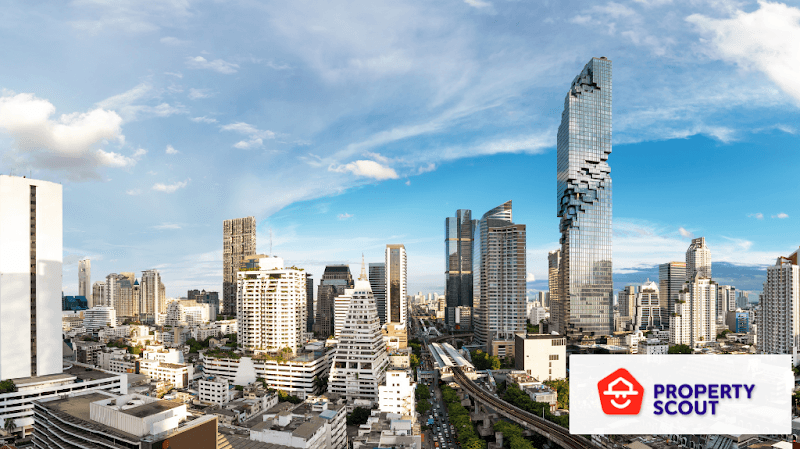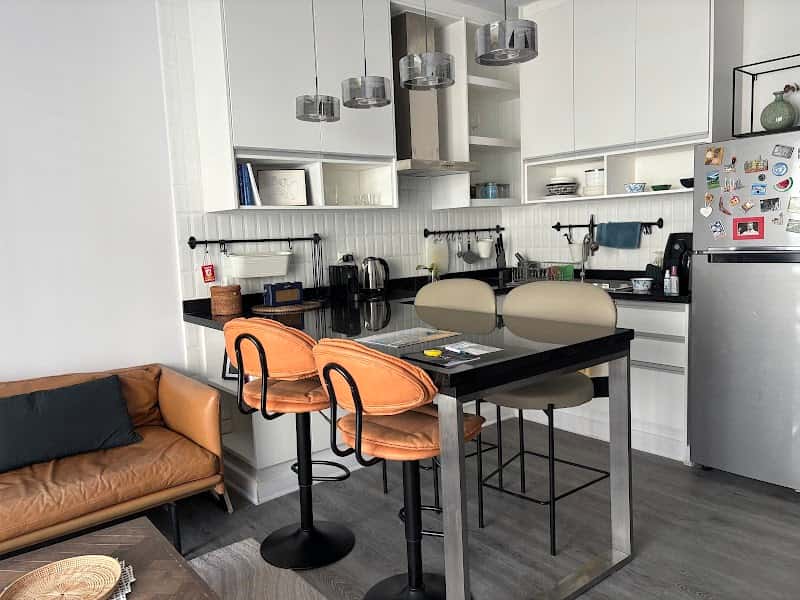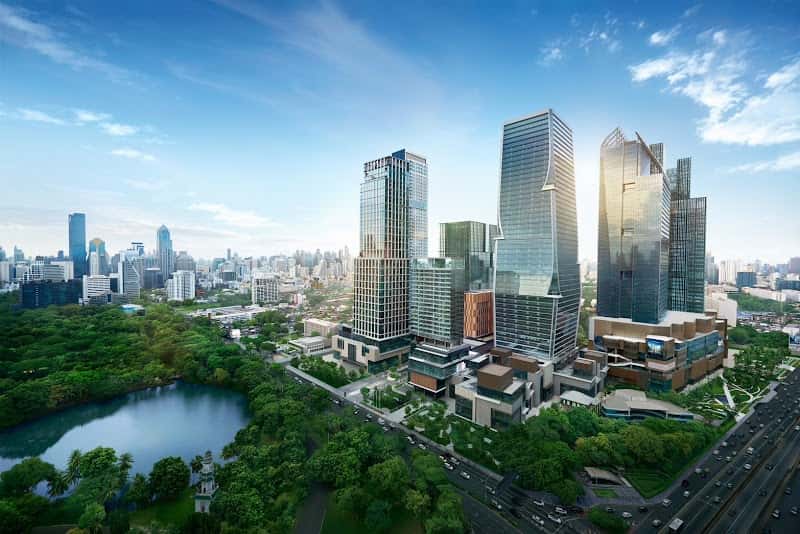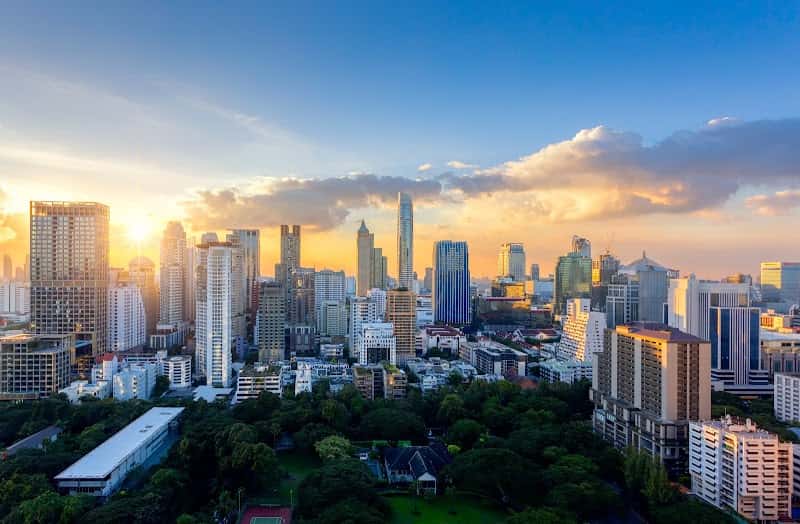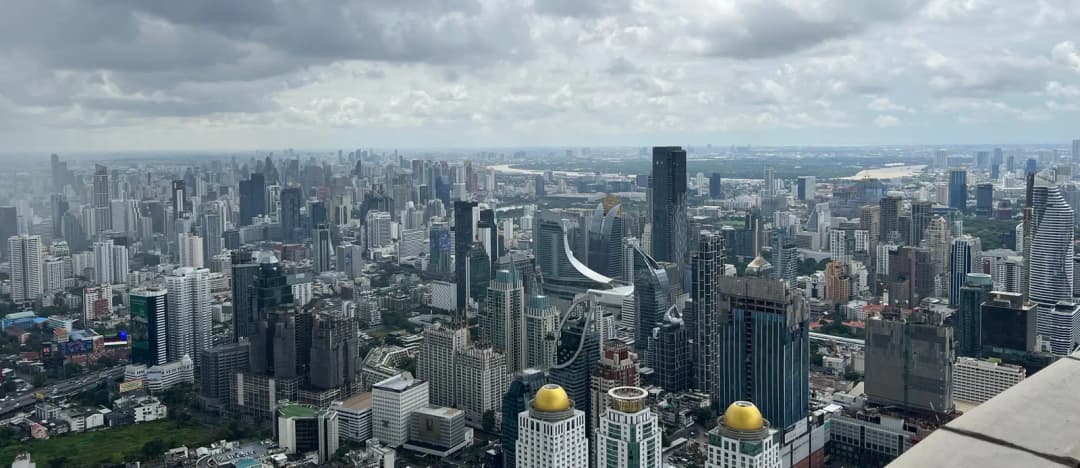
In Bangkok a foreigner can buy an apartment outright, register it in their own name and sell it later, which is why condos in Sukhumvit, Silom-Sathorn, Thonglor and along the BTS and MRT lines attract buyers from all over the world.
The rules are not complicated, but they are strict. A transfer can stall on the day because the building has used up its foreign quota, because money arrived in baht instead of foreign currency, or because the buyer and seller never agreed who pays the transfer fee. This guide sets out how the process works in 2026 from official and well-sourced public information. It is a general explainer, not legal advice for a specific purchase.
What foreigners can and cannot own#
Condos: yes, within the foreign quota#
Under section 19 bis of the Condominium Act B.E. 2522, foreigners and foreign-majority companies may together own units totalling up to 49% of the combined floor area of all units in a registered condominium building. The other 51% must be held by Thai owners (ThaiLawOnline).
Two details matter:
- The quota is measured by floor area, not number of units. A building can reach its foreign limit even though fewer than half of its units belong to foreigners.
- The quota belongs to the building, not to you. Whether you can register depends on how much earlier buyers have already used. The condominium's juristic person (the owners' management body) confirms the remaining quota.
Land and houses: no freehold#
Foreigners cannot own land in their own name. A house usually comes with a lease of the land, and an ordinary registered lease of immovable property is capped at 30 years under section 540 of the Civil and Commercial Code. Renewal clauses are a contractual promise, not a guaranteed right (Thaipedia). Holding land through Thai nominee shareholders is illegal; our guide to the Foreign Business Act and ownership rules explains why nominee structures are a serious risk.
The 75% quota and 99-year leases are not law#
Since 2024, headlines have talked about raising the foreign condo quota to 75% and allowing 99-year leases. In June 2024 the Ministry of Interior said it would propose both ideas, and the Deputy Prime Minister asked the agencies concerned to review their feasibility (The Nation, 22 June 2024). As of November 2026 no bill has been tabled and no amendment has been enacted: the Condominium Act still says 49% and the Civil and Commercial Code still caps an ordinary lease at 30 years (ThaiLawOnline, Thaipedia). Do not pay a premium for a unit, or wait to buy, because a seller says the rules are about to change.
Bringing the money in: the FET form#
A foreigner who is not a Thai permanent resident and did not enter under investment promotion law qualifies to buy under section 19(5) of the Condominium Act. That means proving that funds of at least the purchase price were brought into Thailand in foreign currency, or withdrawn from a non-resident baht account or a foreign currency account (ThaiLawOnline).
The proof is the Foreign Exchange Transaction (FET) form, formerly called the Tor Tor 3, issued by the Thai bank that receives and converts the money. In practice:
- Banks issue the FET document automatically for each inward transfer of USD 50,000 or more (or the equivalent). Since 2018 banks can also issue it for smaller amounts, so ask your bank first. Otherwise keep every credit advice and ask the bank for a confirmation letter listing the remittances, the currency amounts, the conversion and the purpose; law firms report that this package serves the same purpose (ThaiLawOnline FET guide, Wise). The USD 50,000 figure is bank practice, not a rule in the Condominium Act.
- Since 2018 banks no longer have to use a fixed template, but the document must show who requested the transaction, the amount, the exchange rate, the date and the purpose (Wise).
- Send foreign currency and let the Thai bank convert it. Services that convert abroad and deliver baht leave no foreign exchange transaction in Thailand, so they generally do not produce a usable FET.
- The sender should be the buyer, and the stated purpose should be the purchase of the specific condominium unit, with project and unit number. A transfer from a relative or your company can cause problems on the day.
For off-plan purchases where you pay the developer in instalments, each payment can go directly to the developer's account from abroad; ask in writing that the developer's bank issue the FET documents in your name.
The buying process step by step#
1. Check the building and the quota#
Before any deposit, ask the seller or developer for a written statement of the remaining foreign quota from the juristic person. For a resale, also check the title deed for the unit (the condominium unit title deed, known as Or Chor 2) at the Land Office, and ask for the current common area fee and sinking fund charges.
2. Reservation and sale contract#
New projects usually take a reservation fee, then a sale and purchase agreement with a down-payment schedule. Resales usually involve a deposit and a short contract with a transfer date. The contract should state:
- the price, unit number, floor area and transfer date;
- that the sale is conditional on registration under the foreign quota;
- who pays the transfer fee, specific business tax or stamp duty, and withholding tax;
- what happens to your deposit if the seller cannot transfer.
For off-plan units, if the finished area differs from the contract, section 466 of the Civil and Commercial Code lets the buyer reject the unit or accept it with a price adjustment where the difference exceeds 5% (ThaiLawOnline, CCC section 466).
3. Prepare the documents#
On transfer day the Land Office will typically need:
- your passport;
- the FET form or bank confirmation letter;
- the foreign quota letter from the juristic person;
- the debt-free letter confirming no common fees are owed on the unit (the seller provides this for a resale);
- the unit's title deed and the seller's identity documents.
If you cannot attend, a Land Office power of attorney lets someone sign for you.
4. Transfer at the Land Office#
Buyer and seller (or their representatives) attend the Land Office that covers the building. Fees and taxes are paid there, the unit is registered in your name and the title deed is endorsed. Ask your lawyer or the seller in advance how the Land Office expects payment.
What it costs: fees and taxes at transfer#
The Land Office calculates charges using the official appraised value set by the Treasury Department, which you can look up on the Treasury appraisal search, and, for some taxes, the registered sale price if that is higher. The standard rates, from the Department of Lands, are:
| Item | Rate | Basis | Usually paid by |
|---|---|---|---|
| Transfer registration fee | 2% | Appraised value | Negotiable; often split |
| Specific business tax (SBT) | 3.3% | Higher of sale price and appraised value | Seller |
| Stamp duty (only if SBT does not apply) | 0.5% | Higher of sale price and appraised value | Seller |
| Withholding tax, company seller | 1% | Higher of sale price and appraised value | Seller |
| Withholding tax, individual seller | Progressive | Appraised value and years held | Seller |
When it applies to an individual seller: SBT is due if the seller sells within five years of acquiring the unit, unless an exemption applies, such as having had their name in the unit's house registration for at least one year. SBT and stamp duty are mutually exclusive. A developer selling a new unit normally pays SBT. Individual sellers' withholding tax is worked out on the appraised value: a standard expense deduction based on the years held, then the personal income tax rates applied over those years (Department of Lands, ThailandLawOnline).
Who pays what is a matter of contract, not law, so read the clause carefully. Developers often advertise "free transfer" or "50/50 transfer fee" as a promotion.
Worked example (illustrative figures)#
Suppose you buy a new unit from a developer for 5,000,000 baht and the appraised value is 4,500,000 baht:
- Transfer fee: 2% of 4,500,000 = 90,000 baht, shared or paid as your contract says.
- Developer's SBT: 3.3% of 5,000,000 = 165,000 baht.
- Developer's withholding tax: 1% of 5,000,000 = 50,000 baht.
If you are a foreign buyer, you do not get the 0.01% fee rate. That cut, in force from 1 July 2026 to 30 June 2027 under two Ministry of Interior announcements published in the Royal Gazette on 1 July 2026, applies only where the buyer is an individual Thai national and the price, appraised value and mortgage are each no more than 7 million baht (The Nation, Legal 500). Be wary of sales material that quotes the reduced fee to foreign buyers.
Costs after you own the unit#
- Common area fee and sinking fund. Every condo charges a monthly common area fee, usually priced per square metre and billed yearly in advance, and a one-off sinking fund payment for new buyers. Ask for the figures in writing before you sign.
- Land and building tax. A unit that is not your registered primary residence is taxed from the first baht of appraised value at 0.02% up to 50 million baht, so a 5-million-baht unit pays around 1,000 baht a year. Higher bands are 0.03%, 0.05% and 0.10% (Thairath, BAANLYY). A unit used commercially, such as an office or a registered company address, can be taxed at commercial rates instead.
- Rental income. If you let the unit, the rent is taxable in Thailand. Our guide to personal income tax for expats covers the basics.
Mortgages and selling later#
Mortgage loans from Thai banks to foreign buyers are not common, so many foreigners pay with funds from abroad, developer instalments for off-plan units, or financing arranged in their home country. Ask banks directly about their current rules rather than relying on agents' claims.
When you sell, you can sell to a Thai or a foreign buyer, subject to the building's quota at that time. Keep your original FET documents: the bank that sends sale proceeds abroad may ask how the money originally came in, and may also ask for the Land Office withholding tax receipt (ThaiLawOnline FET guide, ThailandLawOnline).
Checklist before you pay a deposit#
- Get the remaining foreign quota in writing from the juristic person.
- Look up the appraised value so you can estimate the 2% transfer fee.
- Agree in the contract who pays every fee and tax, and make the sale conditional on foreign-quota registration.
- Tell your bank you are buying property and ask how it will issue the FET form or confirmation letter; send foreign currency, in your own name.
- Ask for common fees, sinking fund and any arrears, and for a resale, the debt-free letter before transfer day.
- If you plan to rent the unit out, check the building's rules on short-term rentals.
- Consider an independent lawyer to check title and contract, and check credentials yourself before you hire one.
Where to look on bangkok.biz#
Our real estate directory lists agencies and property businesses with addresses and contact details. If you are still deciding between buying and renting, read our guide to renting a condo in Bangkok as a foreigner. For contract and tax help, the legal and finance directory lists firms by area, and our guide on choosing an accountant in Bangkok explains what to ask.
FAQs#
Can a foreigner own a condo in Bangkok? Yes. A foreigner can own a condominium unit freehold in their own name, provided foreign ownership in the building stays within 49% of total unit floor area and the purchase money was brought into Thailand in foreign currency.
Has Thailand raised the foreign condo quota to 75%? No. In November 2026 the quota is still 49%. The 75% figure comes from a government study that has not become law.
Do I need an FET form for every transfer? Banks issue the FET document automatically for transfers of USD 50,000 or more, and since 2018 can issue it for smaller amounts too. Otherwise keep each credit advice and ask the bank for a confirmation letter covering the remittances and purpose. Together the documents must cover at least the purchase price.
How much is the transfer fee for foreigners? The standard 2% of the official appraised value. The 0.01% rate in force from 1 July 2026 to 30 June 2027 is for individual Thai buyers only.
Who pays the transfer fee and taxes? It depends on the contract. Sellers normally pay specific business tax or stamp duty and withholding tax, while the 2% transfer fee is often split or covered by a developer promotion. Put it in writing.
Can I buy a condo through a Thai company? A Thai company with foreign majority ownership counts as foreign under the quota. Using Thai nominee shareholders to get around ownership limits is illegal.
Cite or reuse this guide
You may quote, translate or republish the text of this guide, also in your own work, under CC BY 4.0. Name Bangkok.biz and link to this page. Photos and listing data are not included. How to reuse our guides
"Buying a Condo in Bangkok as a Foreigner in 2026: The 49% Quota, FET Paperwork, Transfer Fees and Taxes", Bangkok.biz, updated 10 November 2026, https://bangkok.biz/guides/buy-condo-bangkok-foreigner (CC BY 4.0)<a href="https://bangkok.biz/guides/buy-condo-bangkok-foreigner">Buying a Condo in Bangkok as a Foreigner in 2026: The 49% Quota, FET Paperwork, Transfer Fees and Taxes</a> by <a href="https://bangkok.biz">Bangkok.biz</a>, licensed under <a href="https://creativecommons.org/licenses/by/4.0/">CC BY 4.0</a>